
Daytona Beach Address History Sources
No single roll names all previous residents. Each record answers a narrower question. The Volusia County Property Appraiser identifies the parcel and present assessed owner. Deeds establish transfers of title, while directories and census schedules add people who occupied the address but may never have owned it. Sanborn maps show the structure, not the household. Permits date later work. A sound Daytona Beach address history keeps those roles distinct and marks every year in which the trail lacks evidence.
| Record source | Local time span | Custodian or collection | Evidence found |
|---|---|---|---|
| Released Official Records | April 4, 1988 to present | Volusia Clerk online | Deeds, liens, mortgages, plats, parties |
| Official Records research media | 1887 to present | DeLand courthouse | Earlier deed books, microfilm, digital images |
| City directories | Known editions from 1914 through 1960, plus selected later years | Libraries, State Library, NARA and other institutions | Names, spouses, occupations and addresses |
| Sanborn maps | 1895, 1901, 1906, 1912, 1916, 1920 and 1924, with later update references | Library of Congress and local collections | Footprint, material, use and address context |
| Federal and Florida censuses | Federal schedules through 1950; state series through 1945 | NARA, State Archives and library databases | Household members, relationships and residence |
| Permits and newspapers | Coverage varies | Daytona Beach iMS, city requests and library databases | Alterations, named parties, events and obituaries |
Begin with the newest reliable fact, then move backward. For a recent transfer, use the parcel card and released deed image. For a question before the web cutoff, carry the same party names, book and page, and legal description to the DeLand research area. Older past residents require directory, census, map, newspaper, and archive work as well as the ownership chain.
Previous Residents in Volusia Deeds
The Volusia County Property Appraiser search is the practical starting point for a current address. Save the parcel number, situs address, mailing address, legal description, sales history, and the map link. Situs means the physical property address. Mailing is where assessment notices go, which may be a different house, a post office box, or an agent. Neither field proves who else lives there.
Next use the Volusia Official Records Inquiry. Its released index and images begin on April 4, 1988. The durable keys are a party name, instrument number, book and page, and legal description. A modern street address may not be indexed in an older deed. Search name variants, trusts, and married names, and read the actual conveyance rather than relying only on a result row.
- Match the Daytona Beach address to the correct parcel and copy its legal description.
- Open the newest purchase deed and identify both parties and any prior-record reference.
- Search the seller, who is the grantor in that deed, as a grantee in earlier years.
- Repeat the same handoff until the chain reaches the online cutoff.
- Take the names, dates, legal description, and book/page citations to DeLand for earlier research media.
- Grantor
- The person or entity transferring an interest in the property.
- Grantee
- The person or entity receiving that interest.
- Chain of title
- The linked series of transfers for the same parcel.
- Legal description
- The land description that remains useful when a street label changes.
The Clerk can explain equipment and access, but staff cannot perform a title or lien search. Deeds establish owners, not all previous residents. Mortgages and satisfactions can bracket an ownership period, but they do not replace a conveyance.
Daytona Beach Records Beyond 1988
The online cutoff is not the start of Volusia County record keeping. The Clerk's Official Records information says the public-research area at the Volusia County Courthouse in DeLand reaches back to 1887 through microfilm and digital media. The Recording Department is in Room A121, and appointments are recommended for work with original books in the Historical Records room. This access gap matters for a Daytona Beach property that changed hands before the web series began.
Bring a research log with each spelling, approximate year, document number, book/page, and exact legal description found online. A reference to an earlier instrument can save hours. If a surname yields too many hits, narrow by date or document type. If the trail breaks at a trust or company, follow the recorded parties instead of assuming the beneficial owner.
Useful shortcut. Search each seller as an earlier buyer. That grantor-to-grantee handoff is the core of a backward deed chain.
Volusia County was created in 1854, but the stated Official Records research coverage begins in 1887. Earlier land evidence may be filed in deed books, predecessor jurisdictions, or state and federal land sources. Record the gap rather than claiming an unbroken chain.
Past Residents Across Three Names
Daytona, Daytona Beach, and Seabreeze consolidated in 1925. That event can make a stationary household look as if it moved. A 1924 directory may place the same address under Seabreeze, while a 1926 volume uses Daytona Beach. Catalogs, maps, newspapers, and directories should therefore be searched under all three names for any pre-consolidation question.
Street names and numbers can also shift during growth. No official, complete old-to-new renumbering table was located. Reconstruct continuity with consecutive directory street guides, plats, Sanborn sheets, and city historical-planning files. The legal description is often the strongest bridge. Postal use adds another wrinkle because a Daytona Beach mailing address can fall outside legal city limits.
This local change is one of the best checks against a false break in the previous residents trail. Do not assume that a changed heading means a changed house.
Daytona Beach Maps Date Residences
Sanborn fire-insurance maps help answer whether the building existed during an alleged occupancy period. The local sequence includes sheets from 1895, 1901, 1906, 1912, 1916, 1920, and 1924, plus later update references. The 1916 Daytona and Seabreeze Sanborn set has nine sheets. Compare footprint, material, use, street label, and nearby landmarks. A Sanborn map does not name occupants.
For later work, Daytona Beach iMS can add a permit timeline. Public results may show an address, work description, applicant or contractor, valuation, status, and inspection dates. These details can date construction or a major alteration, but a contractor or permit applicant is not proof of residence. Older permit coverage must be requested from the city when the online period does not reach the question.
If a directory lists an address before the structure shown today was built, the address may have referred to an earlier building on the parcel.
Daytona Beach Households by Year
Ownership is only half the history. Daytona Beach directories can name a resident, spouse, occupation, employer or work address, and home address. A reverse section, when present, lets the researcher start with a street and house number. The known local run begins in 1914 and continues through 1960 with gaps, followed by selected regional editions. Details about holdings and entry conventions belong on the Daytona Beach city directory page.
Pair a directory close to a census date with the released schedule, but do not force an exact match. A directory was compiled over time, while the census records a specific enumeration date. The federal 1950 schedule is the newest public federal census. Florida state censuses through 1945 can fill years between federal counts.
- Transcribe the address and every name from the nearest directory year.
- Check prior and following volumes for arrivals, departures, and spelling changes.
- Locate the household in the nearest federal or Florida census and compare relationships.
- Return to the reverse directory to distinguish a move from an omission.
- Verify ownership with deeds and a death with an obituary, probate file, or eligible certificate.
The label “previous residents” should remain evidence-based. A directory supports occupancy for its publication context. A census supports residence on its enumeration date. Neither proves continuous residence between those records.
Daytona Beach Archive Search Paths
The Florida State Archives catalog extends a search when local web tools end. A catalog record does not mean the item is digitized. The screen below shows the official catalog route assigned to Daytona Beach previous-resident research.
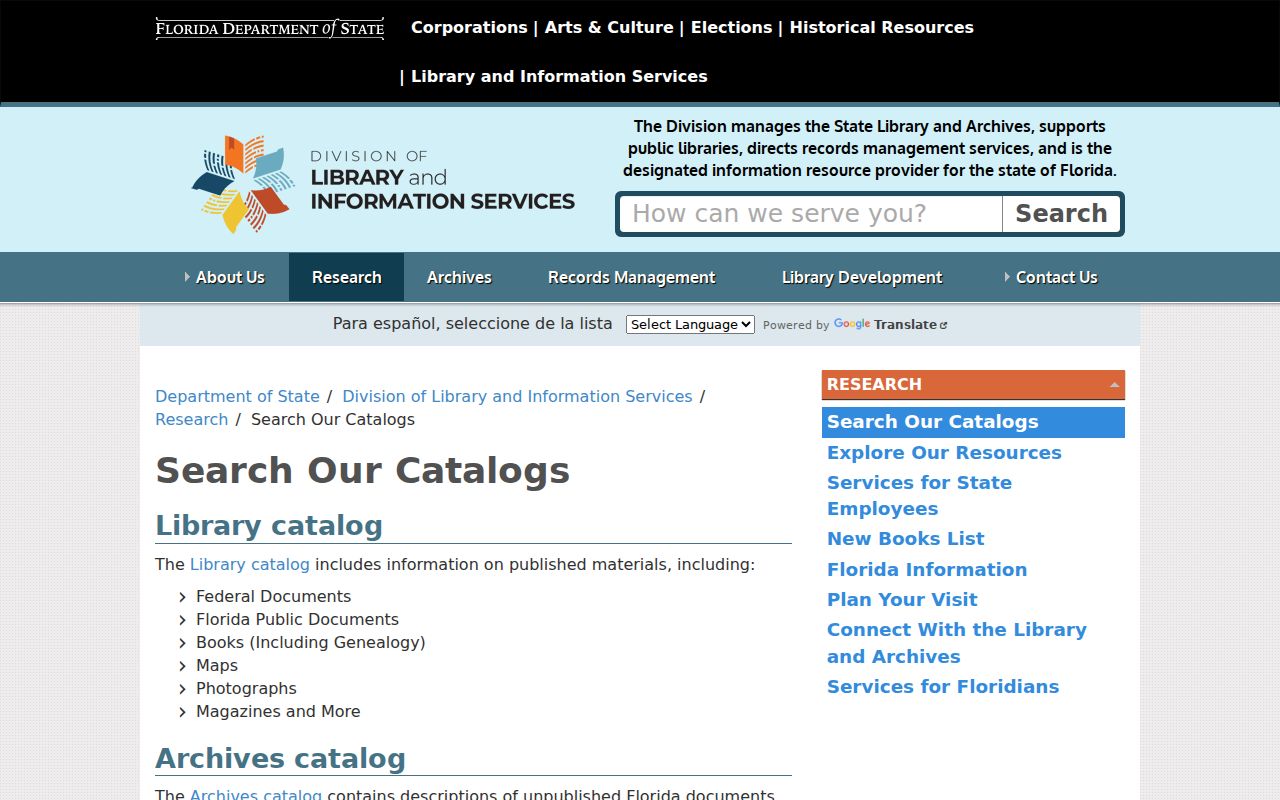
Search place variants, surnames, subdivisions, and record groups. Ask the reference desk about access when a catalog entry lacks an image or appears only as a collection-level description.
The State Archives genealogy collection adds family histories, census, immigration, church, cemetery, military, and family-name files. Its official overview is shown here.
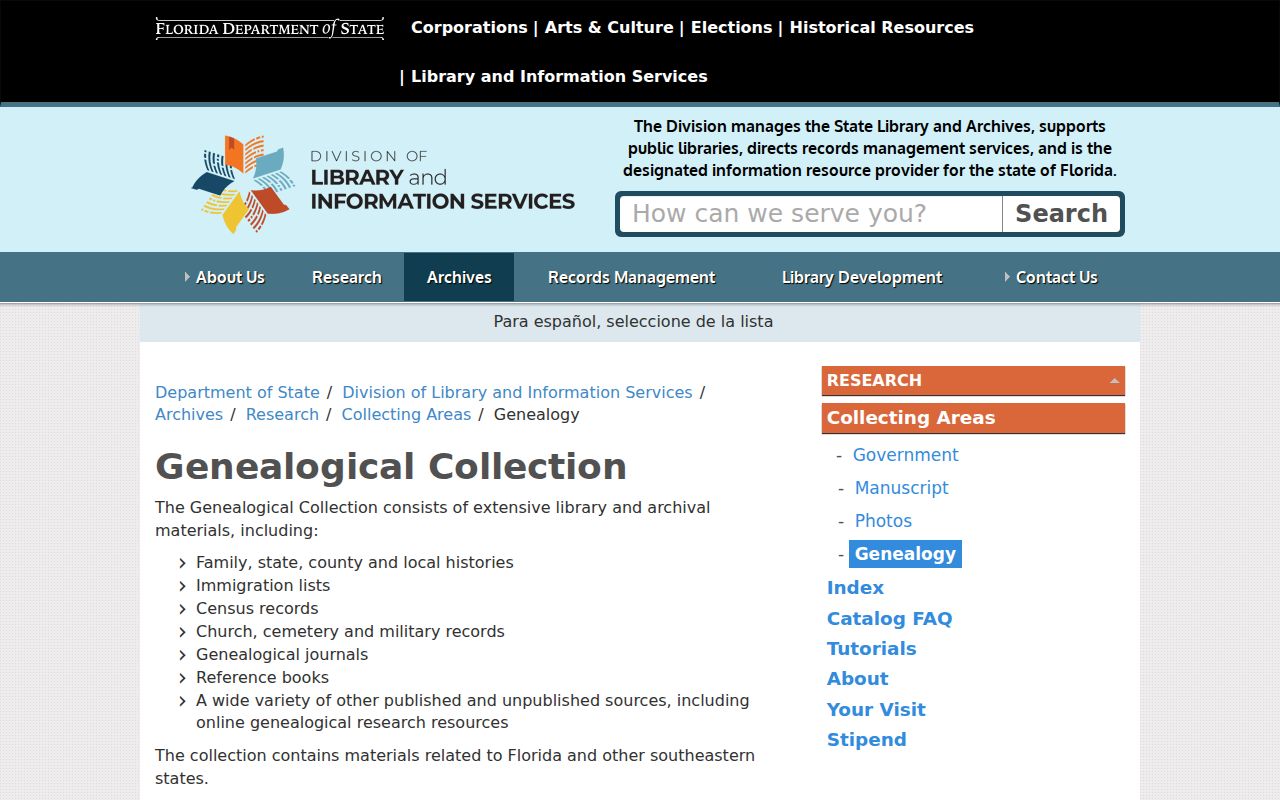
These sources can connect a household name from a directory with a wider family trail. Access rules vary, so note whether the result is a digital item, an on-site record, or a reference request.
Florida Memory and Past Residents
Florida Memory offers free digital access to selected State Library and Archives holdings. It can surface photos, manuscripts, maps, and historical records that add context to a Daytona Beach house or family. The assigned capture shows the official digital collection entry point.
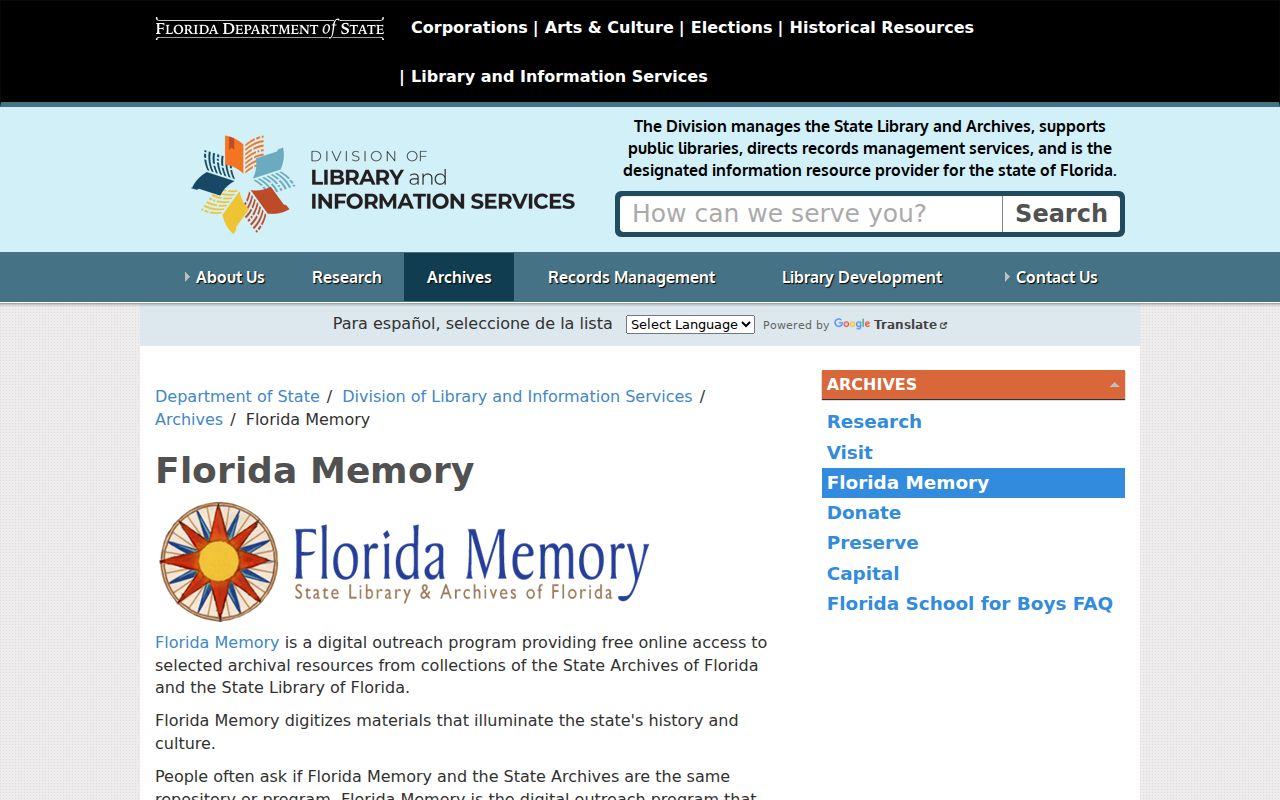
Digital results are only part of the archive. A blank search does not mean no relevant record exists. Follow promising collection names into the catalogs and reference services.
For hyperlocal help, the Halifax Historical Society at 252 S. Beach Street holds local photos, files, and manuscripts. Volusia County Public Library databases add NewsBank, HeritageHub, and genealogy tools. Ancestry Library Edition requires in-branch use, while licensed news products may allow card-based remote access.
Close a Daytona Beach Resident Trail
Obituaries and probate files often explain why a name disappears. Daytona Beach News-Journal collections available through Volusia County Public Library can name relatives, services, and prior places. Treat newspaper text as a lead, then resolve a deed or court statement against the official identifier.
The Volusia Clerk Probate and Guardianship office maintains estates, wills, trusts, caveats, guardianships, and related files. Public papers may name petitioners, heirs, counsel, and service addresses, while confidential inventories and guardianship details can be restricted. A death certificate without cause is public in Florida, but cause remains restricted for fifty years except to qualified applicants.
A careful finish separates past residents from owners, dates each claim, and cites the record that supports it. Seasonal use, rental occupancy, company ownership, and a mailing address elsewhere are common reasons the parcel card and household record may differ.
Lawful personal use. House and family history are valid reasons to trace Daytona Beach records. Never use an address trail to watch, threaten, or harass a living person.